UAE's most trusted chiller and freezer van rental service. HACCP certified fleet with IoT temperature monitoring, GPS tracking, and free same-day delivery. Daily, weekly, and monthly plans from AED 349.

March 2026 · 9 min read

Ramadan Food Logistics in Dubai: The Peak-Demand Guide

How restaurants, hotels, caterers, and mosques keep chilled and cooked food moving through Dubai's compressed iftar and suhoor windows — without breaking the cold chain or missing maghrib.

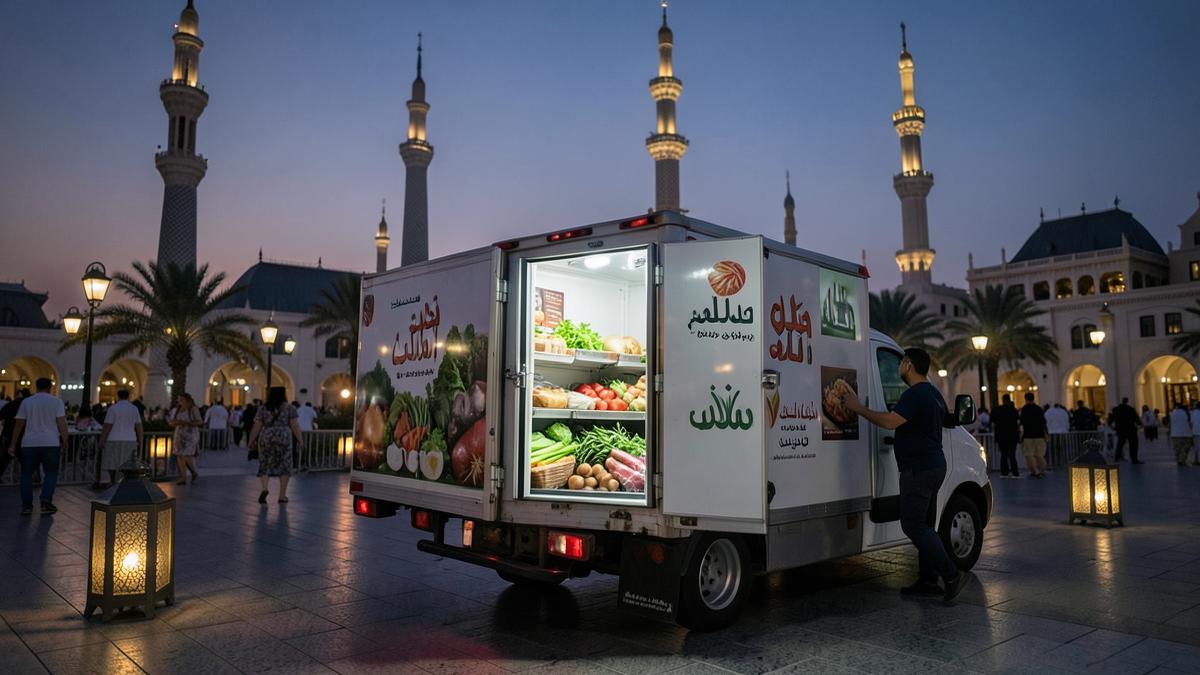
Chiller van delivering food for Ramadan iftar catering in Dubai

Ramadan is the single most demanding month of the year for Dubai's food logistics operators. Instead of a steady flow of deliveries spread across the day, the entire market compresses into two narrow windows — a massive surge before iftar and a smaller peak before suhoor — while traffic, driver hours, and vehicle availability all move against you at once. Getting it right requires planning weeks in advance, not days.

Key Takeaway

Book your Ramadan chiller van 3-4 weeks ahead, favor monthly contracts for recurring iftar programs, and build in a 60-90 minute buffer before maghrib to absorb Dubai's pre-sunset traffic surge.

Plan Your Ramadan Cold Chain Now

Whether you need one van for a single iftar tent or a fleet across multiple hotel banquet halls, book early to secure the vehicles and drivers you need for the full month.

Ramadan compresses Dubai's food logistics into a narrow pre-iftar window, with demand spiking 2-4x for catering, mosque meal distribution, and hotel banquets in the two hours before maghrib. Businesses need short-term or monthly chiller van rentals, adjusted driver schedules for fasting staff, and strict HACCP holding temperatures for large-batch cooked food to avoid spoilage and missed deadlines.

Why Ramadan Changes Dubai's Cold Chain Overnight

Ramadan fundamentally reshapes food logistics in the UAE. Instead of a steady, all-day flow of deliveries, the entire market compresses into two intense windows: a massive surge before iftar (the sunset meal that breaks the fast) and a second, smaller wave before suhoor (the pre-dawn meal). Restaurants, hotels, caterers, supermarkets, and charity organizations all need refrigerated capacity concentrated into just a few hours a day, rather than spread evenly across 24 hours.

For chiller van operators and the businesses that rely on them, this means normal delivery schedules and vehicle allocations no longer work. A fleet sized for average daily volume will be badly under-resourced during the 90 minutes before maghrib and largely idle for the rest of the day. Planning for Ramadan means planning for extreme peaks, not averages.

Iftar and Suhoor Demand Peaks

Iftar demand is the single largest cold chain event of the Islamic calendar. Hotels, restaurants, and catering companies prepare enormous volumes of chilled and prepped food — salads, cold mezze, desserts, dairy-based drinks like laban and qamar al-din, and pre-cooked mains — that must be transported and plated within a tight window ending precisely at maghrib (sunset prayer time). Missing this window is not a minor inconvenience; it means a failed service for hundreds or thousands of guests.

Suhoor deliveries, which occur in the early hours before dawn (fajr), create a second, quieter but still significant peak. Many hotels and 24-hour restaurants run suhoor tents and buffets that require fresh chilled ingredient top-ups delivered between midnight and 3-4 AM, when regular delivery fleets are usually stood down.

Both peaks are date-shifting: as Ramadan moves roughly 10-11 days earlier each Gregorian year, maghrib and fajr times shift with it, so delivery schedules must be re-planned annually rather than copied from the previous year.

Iftar Tents and Hotel Banquet Catering

Large-scale iftar tents — sponsored by hotels, corporations, and community groups — are one of the biggest chiller van use cases during Ramadan. These tents can serve anywhere from 200 to several thousand guests nightly for the full 29-30 days of the month, requiring a reliable, repeatable supply chain of chilled and frozen ingredients delivered daily, often to a single site for weeks at a time.

Hotel banquet operations scale up dramatically too, with many properties running multiple simultaneous iftar and suhoor services across ballrooms, outdoor tents, and in-room dining. This typically means banqueting and catering teams need dedicated chiller vans on standby rather than shared, on-demand vehicles, because a delayed delivery during Ramadan has a much higher reputational cost than at other times of the year.

Because these events run for weeks with predictable daily volume, monthly rental contracts are almost always more cost-effective than daily bookings — see our guide on [reducing cold chain costs](/blog/reduce-cold-chain-costs-dubai) for the underlying math.

Mosque and Charity Meal Distribution

Beyond commercial catering, Ramadan sees a huge increase in charitable food distribution — mosque-affiliated iftar programs, labour camp meal drives, and community kitchens distributing thousands of free meals nightly across Dubai and the wider UAE. These programs often operate on tight budgets and volunteer labour, but the food safety requirements are identical to commercial operations.

Charity and mosque distribution routes typically cover multiple stops across a wide geographic area within the same narrow pre-maghrib window, which makes route planning and vehicle capacity even more critical than for a single-site hotel delivery. A single well-planned chiller van route can often replace several smaller, uncoordinated trips, cutting both cost and spoilage risk.

Traffic Patterns Before Maghrib

Dubai's roads become dramatically congested in the final 60-90 minutes before maghrib, as commuters rush home to break their fast with family and delivery vehicles compete for the same road space. This is the worst possible time to be caught in traffic with a van full of temperature-sensitive food, since every extra minute in transit erodes the cold chain margin built up during loading.

Successful Ramadan logistics planning builds in a buffer: loading and pre-cooling should be completed at least 60-90 minutes ahead of maghrib, with drivers dispatched early enough to absorb typical Ramadan traffic delays without missing the deadline. Many operators also shift delivery routes to avoid major arterial roads like Sheikh Zayed Road during this specific window, using secondary routes even if they are marginally longer in distance.

Staffing and Driver Fasting Considerations

Most drivers in the UAE's food logistics sector are fasting during Ramadan, and UAE labour law reduces standard working hours by two hours per day for the month. This directly shrinks the available driver-hours during exactly the period when delivery demand is highest, creating a genuine capacity crunch if not planned for in advance.

Businesses that rely on chiller van rental rather than owning a fleet outright have an advantage here: they can scale up the number of vehicles and drivers temporarily for the month without committing to permanent headcount increases. It's also worth scheduling driver shift patterns so that the most experienced drivers cover the critical pre-iftar hour, and building in rest periods immediately after iftar when drivers can break their own fast.

Clear, written delivery windows agreed with clients in advance — rather than best-effort timing — help manage expectations and reduce pressure on fasting drivers to speed through traffic.

Booking Ahead: Short-Term vs Monthly Rentals

Chiller van availability in Dubai tightens noticeably in the two to three weeks before Ramadan begins, as hotels, caterers, and charities lock in vehicles for the full month. Businesses that wait until the first week of Ramadan to book often find themselves paying premium daily rates for whatever capacity remains, or missing out entirely during peak dates like the middle Fridays and the final ten nights (Laylat al-Qadr period), which see even higher demand.

For any operation needing a chiller van for more than roughly 10-15 days across the month, a monthly rental contract is almost always the better commercial choice, locking in a lower per-day rate and guaranteed vehicle availability for the full Ramadan period. For one-off events — a single corporate iftar, a specific charity drive — a short-term or daily booking makes more sense, provided it is confirmed well ahead of the date.

As a general rule, we recommend businesses finalize their Ramadan chiller van bookings at least three to four weeks before the expected start date, since the exact date depends on moon sighting and can shift by a day either way.

  • Book 3-4 weeks ahead for guaranteed vehicle availability
  • Monthly contracts suit recurring iftar tents and hotel banquets
  • Daily bookings suit one-off corporate or community events
  • Confirm exact maghrib/fajr times weekly as they shift through the month

HACCP Holding Temperatures for Large-Batch Cooked Food

Ramadan catering typically involves cooking food in much larger batches than usual, then holding it for transport before rapid service at iftar. This creates real HACCP risk: large batches of rice, meat, and sauces cool slowly, and if held in the temperature danger zone (5°C-60°C) for too long before or during transport, bacterial growth can occur even if the food looks and smells fine.

Cooked food destined for chilled transport should be blast-chilled or rapidly cooled to below 5°C within 90 minutes of cooking wherever possible, then held at that temperature throughout the chiller van journey. Hot-held food being kept above 60°C for immediate iftar service needs insulated, temperature-monitored transport rather than a standard chiller van, and should not sit in transit for more than the shortest practical time.

Our detailed breakdown of the relevant Dubai Municipality and UAE.S standards is available in our [HACCP food transport requirements guide](/blog/haccp-food-transport-requirements-uae), which is worth reviewing alongside any Ramadan catering plan.

Contingency Planning for the Month

Even the best-planned Ramadan logistics operation should have a contingency plan, because the margin for error before maghrib is essentially zero. This means keeping a backup vehicle or backup driver on call for at least the busiest dates (weekends, the final ten nights, and any dates with a scheduled large event), and having a pre-agreed fallback route in case of an accident or major road closure on the primary route.

It's also worth stress-testing refrigeration equipment before the month begins — a mid-Ramadan breakdown is far more costly than the same failure in a normal month, both in wasted food and in reputational damage to a hotel or caterer's Ramadan program.

Ramadan Delivery Windows by Segment

SegmentPeak WindowTypical VolumeRecommended Van Size
Iftar tents (large)90 min before maghrib500-3,000+ meals/night3-ton chiller truck
Hotel banquet iftar/suhoor2 hrs before maghrib / midnight-3AM200-1,000 covers1.5-3 ton chiller van
Restaurant iftar buffets1-2 hrs before maghrib50-300 covers1-ton to 1.5-ton chiller van
Mosque/charity distribution60-90 min before maghrib500-5,000 meals across stopsMulti-stop 1.5-3 ton van
Supermarket Ramadan stock-upLate afternoon dailyHigh volume, mixed chilled/frozenDual-zone chiller van
Suhoor tent top-upsMidnight-3AMSmall, frequent restock1-ton chiller van

Actual volumes vary by venue size and guest count; confirm exact maghrib/fajr timings weekly as they shift through the month.

Frequently Asked Questions

How far in advance should I book a chiller van for Ramadan?

We recommend confirming your Ramadan chiller van booking at least 3-4 weeks before the expected start date. Availability tightens quickly in the final two weeks, especially for the busiest dates like weekends and the last ten nights.

Is a monthly rental cheaper than daily bookings for Ramadan?

Yes, if you need a chiller van for more than roughly 10-15 days across the month. Monthly contracts typically reduce the per-day rate by 15-25% compared to booking daily, and guarantee vehicle availability throughout Ramadan.

What temperature should cooked iftar food be held at during transport?

Cooked food intended for chilled transport should be rapidly cooled to below 5°C within about 90 minutes of cooking and held at that temperature throughout the journey. Hot-held food for immediate service should stay above 60°C and spend minimal time in transit, per HACCP danger-zone guidance.

How does Ramadan affect driver working hours in Dubai?

UAE labour law reduces standard working hours by two hours per day during Ramadan for all employees, including drivers. This shrinks available driver-hours exactly when delivery demand peaks, so many businesses temporarily add rental vehicles and drivers for the month.

What size chiller van do I need for an iftar tent serving 1,000 guests?

For a large iftar tent serving 500-1,000+ guests nightly, a 3-ton chiller truck is typically needed to transport the volume of chilled ingredients and prepared food required, especially if the tent runs for the full month.

Why is traffic before maghrib such a big problem for deliveries?

Dubai's roads become heavily congested in the 60-90 minutes before maghrib as commuters rush home to break their fast. This is exactly when iftar deliveries are most time-critical, so routes must be planned with extra buffer time and, where possible, avoid major arterial roads during that window.

Can I get a chiller van for just one Ramadan event rather than the whole month?

Yes, short-term and daily rentals are available for one-off events such as a single corporate iftar or a specific charity distribution drive. Booking well ahead of the date is still important, as demand rises sharply through the month.

Do suhoor deliveries need a separate van rental to iftar deliveries?

Not necessarily — the same chiller van can often cover both an evening iftar delivery and an overnight suhoor top-up if the schedule and driver hours allow, but many high-volume hotels prefer to allocate a dedicated vehicle to each window to reduce risk of delay.

Contact & Depot Details

DegreeZero Chiller Vans