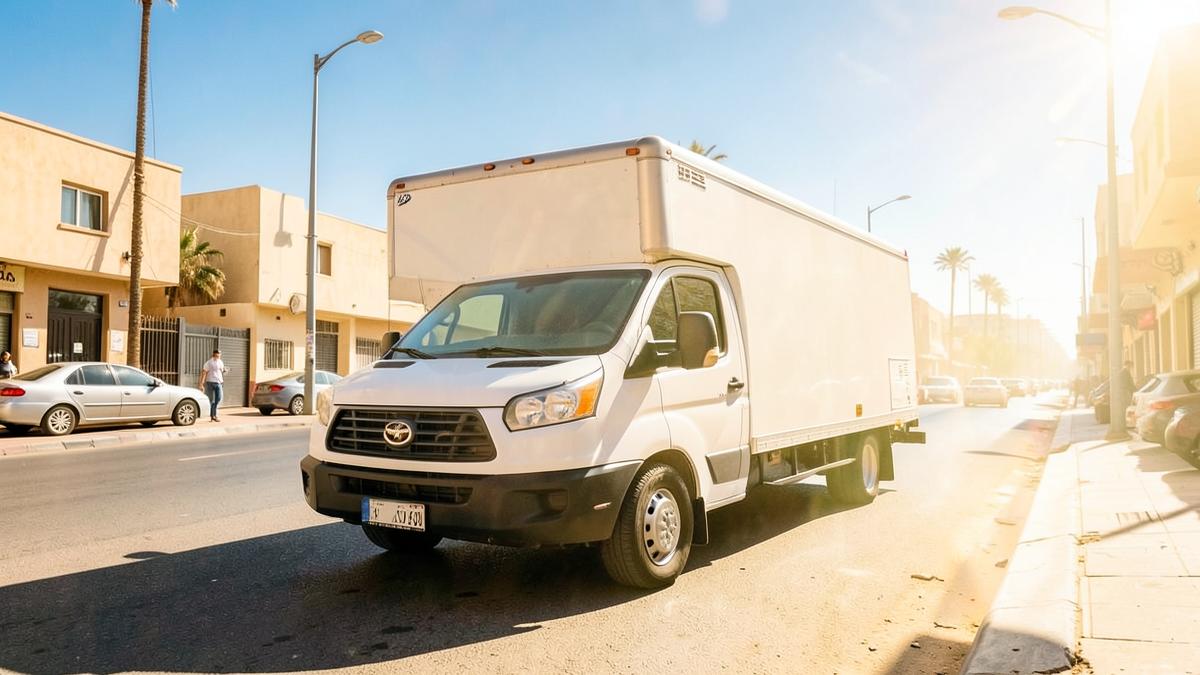
From June through September, Dubai's ambient temperature routinely climbs past 45°C, and surface temperatures on asphalt can exceed 60°C. For any business moving chilled or frozen goods, this isn't a minor seasonal inconvenience — it's a fundamentally harder operating environment that demands different vehicle sizing, different scheduling, and tighter monitoring than the rest of the year. Refrigeration units that comfortably hold setpoint in a mild Dubai winter can be pushed to their thermal limit in peak summer heat, and a single missed step — a warm load, a long door-open event, an unplanned midday stop — can be the difference between a compliant delivery and a spoiled shipment.
This guide walks through the specific adjustments that matter most: how reefer duty cycles change in extreme heat, why pre-cooling is the single highest-leverage habit you can build, how to structure routes and delivery windows around the hottest hours, what to check on vehicle insulation and door seals before summer hits, how to handle and document temperature excursions, and how to think about vehicle sizing, standby capacity, and monthly rental budgeting during peak season.
Quick Reference
In peak summer heat, a stalled chiller van can lose safe temperature in as little as 20-30 minutes with the engine off — roughly a third of the time it takes in winter. Breakdown contingency and standby vehicle access matter far more between June and September.
Common Summer Mistake
Loading warm or ambient-temperature product straight into a chiller van without pre-cooling the cargo box first is the single most common cause of summer temperature excursions we see. It's also the easiest and cheapest habit to fix.